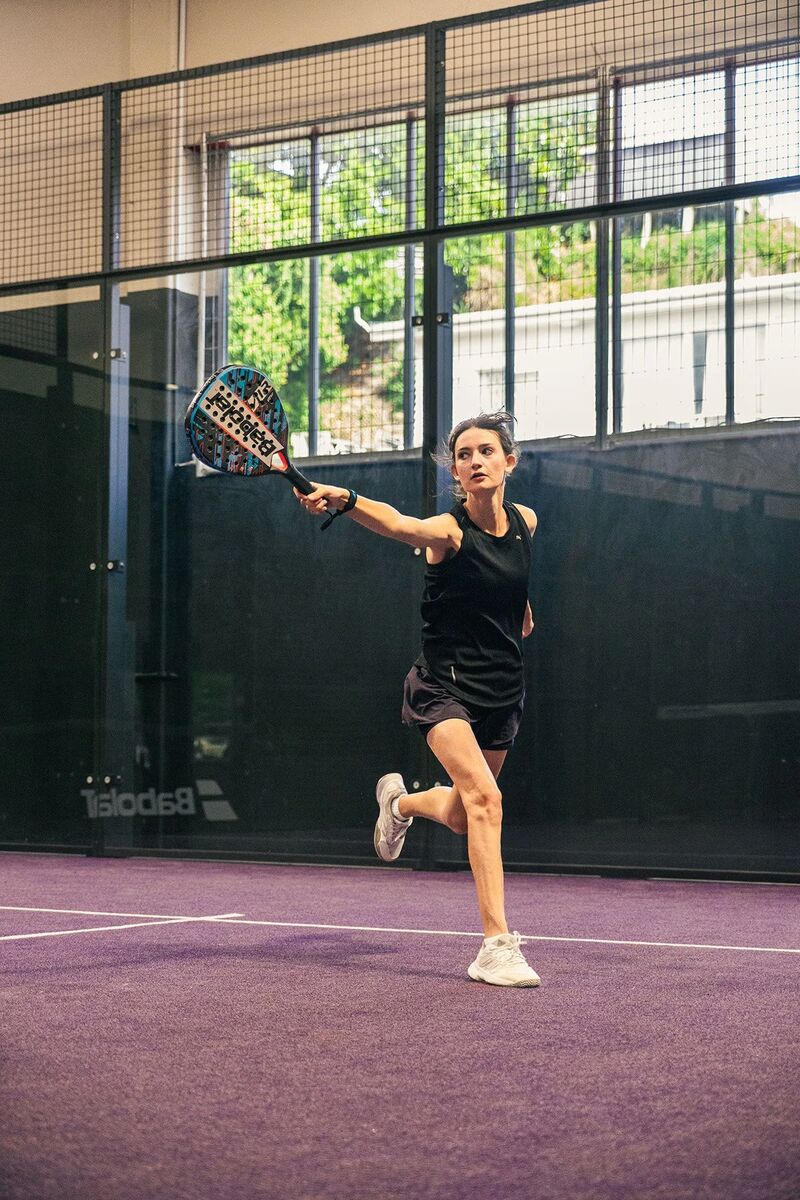
Your racket doesn't come with an expiration date, but it definitely has a shelf life. Unlike tennis rackets that break strings and announce their demise dramatically, padel rackets die slowly. Performance degrades gradually until you're playing with equipment that's actively holding back your game.
Here's how to recognise when your faithful companion has become a liability, and what you can do to extend its useful life.
Clear Signs It's Time to Replace
Visible Face Damage
Cracks or chips in the hitting surface are immediate replacement signals. Even small cracks will spread under the stress of continued play, potentially leading to face separation or sharp edges that affect ball contact.
Delamination between face layers appears as bubbling or separation lines in carbon fiber or fiberglass faces. Once this process starts, it accelerates quickly and can't be reversed.
Worn-through surface texture on rough rackets indicates the face material itself is wearing away. While not dangerous, this significantly affects spin generation and ball control.
Core Deterioration
Loss of "pop" or responsiveness happens as EVA cores break down from repeated impact. The racket feels dead on contact, requiring more effort to generate the same ball speed.
Uneven response across the face suggests internal core damage. Sweet spot shots feel normal, but off-centre hits feel drastically different than they used to.
Rattling or internal movement indicates core separation from the face. This is an immediate replacement situation as the racket becomes unpredictable and potentially unsafe.
Handle and Frame Issues
Handle separation or cracking affects grip security and can lead to the racket flying from your hands during play.
Frame warping or bending changes the racket's aerodynamics and sweet spot location. Usually results from impact damage or extreme temperature exposure.
Edge guard damage beyond cosmetic wear can expose internal construction to moisture and accelerate deterioration.
Subtle Performance Degradation
Feel Changes
Rackets age gradually, and your muscle memory adapts to the changes. Compare your current racket to a newer model of the same type. If the difference is noticeable, your racket has likely degraded significantly.
Increased Vibration
As internal dampening materials break down, more shock reaches your arm. If you're experiencing new arm discomfort with the same playing frequency, your racket might be the culprit.
Inconsistent Ball Response
Shots that used to feel automatic require more conscious effort. The sweet spot seems smaller, and off-centre hits feel worse than they used to. This often indicates core material fatigue.
Racket Lifespan by Usage
Recreational Players (1-2 times per week)
Expected lifespan: 18-24 months
Light usage means cores and faces experience less stress. Quality rackets in this usage category can last two years or more while maintaining acceptable performance. Budget rackets typically show wear after 12-15 months.
Regular Players (3-4 times per week)
Expected lifespan: 8-12 months
Consistent play accelerates wear patterns. EVA cores begin losing responsiveness around the 8-month mark, while face materials start showing significant wear after 10-12 months of regular use.
Competitive Players (5+ times per week)
Expected lifespan: 4-6 months
Intensive use with hard hitting shortens racket life considerably. Many competitive players maintain multiple rackets and rotate them to extend overall equipment life. Tour players often replace rackets every 2-3 months.
Extending Racket Life
Proper Storage
Temperature control: Avoid extreme heat or cold. Car boots in summer can reach temperatures that damage EVA cores permanently.
Humidity management: Store in dry conditions when possible. Moisture can penetrate small cracks and accelerate deterioration.
Protection from impact: Use racket cases or covers. Even small impacts during transport can create micro-fractures that spread over time.
Playing Habits
Court surface awareness: Rougher artificial turf surfaces accelerate face wear compared to traditional clay courts.
Ball condition: Old, worn balls with raised surfaces create more friction and wear on racket faces.
Impact management: Avoiding wall collisions and ground strikes obviously helps, but even aggressive volleys against the fence take their toll.
Maintenance Practices
Regular cleaning: Remove sand and dirt that can act as abrasives between ball and racket face.
Grip replacement: Fresh grips not only feel better but reduce slippage that can cause mishits and stress the racket frame.
Edge guard inspection: Replace damaged edge guards before they allow moisture or debris into the racket interior.
Upgrade vs Replace
Replace with Same Model When:
- You're completely satisfied with your current racket's performance
- The wear is purely from age/use rather than a mismatch with your game
- Your playing style and skill level haven't changed significantly
- The model is still available and within your budget
Upgrade to Different Racket When:
- Your skill level has improved since your last purchase
- Your playing style has evolved (more aggressive, more defensive, etc.)
- You've experienced arm issues that might benefit from different characteristics
- New technology offers genuine benefits for your specific needs
Financial Considerations
Cost-Per-Hour Analysis
A $300 racket lasting 12 months with 3 sessions per week costs about $1.92 per session. A $150 racket lasting 6 months under the same usage costs $1.44 per session. The premium racket provides better value despite higher upfront cost.
Performance vs Economy
Playing with a worn racket past its useful life costs you more than money. Poor equipment can hurt skill development, increase injury risk, and reduce playing enjoyment. Sometimes the economical choice is replacing sooner rather than later.
Common Replacement Mistakes
Waiting Too Long
Many players become so accustomed to degraded performance they forget how good their racket used to feel. By the time replacement becomes obvious, they've been playing with compromised equipment for months.
Replacing Too Early
Cosmetic wear doesn't necessarily indicate performance loss. Small face scratches or worn graphics don't affect how the racket plays. Focus on functional rather than aesthetic condition.
Ignoring Skill Development
As you improve, your equipment needs may change. A racket that was perfect when you started might be holding you back six months later, regardless of its physical condition.
The Replacement Process
Timing Your Purchase
Don't wait until your racket is completely unusable. Shop for replacement while your current racket is still functional, allowing time to find the right model and price.
Demo Before Buying
If possible, demo potential replacements while still playing with your current racket. This provides direct comparison and helps identify whether differences are improvements or just changes.
Transition Period
Keep your old racket as a backup until you're completely comfortable with the new one. Different characteristics require adjustment time, and having a familiar option available reduces pressure.
A racket that's wearing out gives you advance warning. A racket that breaks gives you none. Replace before you have to, not when you must.
Ready to explore replacement options? Browse our racket reviews or take our racket quiz to find models that match your current needs and skill level.